Few neighborhoods in Silicon Valley combine history and everyday convenience as well as Almond Grove. This historic district sits steps from downtown Los Gatos. Its tree-lined streets hold restored Victorians, Craftsman bungalows, and homes built by the people who founded the town.
If you are thinking about buying a home in Almond Grove, this guide covers what you need to know: where the district is, how it came to be, what the homes are like, and what owning a historic property in Los Gatos involves.
Why Home Buyers Seek Out Almond Grove
The appeal comes down to three things buyers rarely find together.
- Walk-to-town living. Downtown Los Gatos restaurants, coffee shops, boutiques, the library, and the weekend farmers market are a short walk away. Many residents can run most errands without getting in the car.
- Protected character. Almond Grove is one of five official historic districts in Los Gatos. Design guidelines limit out-of-scale development, so the streetscape you buy into is likely to look much the same in 20 years.
- Genuine community. The neighborhood is known across town for its Halloween displays, when decorated porches draw crowds of trick-or-treaters from all over Los Gatos. Holiday decorating carries the same spirit into December.
That combination is why Almond Grove remains one of the most recognized residential addresses in Los Gatos.
Where Is Almond Grove in Los Gatos?
Almond Grove sits just north and west of downtown Los Gatos, in the 95030 ZIP code. The district is generally described as running from Saratoga-Los Gatos Road (Highway 9) to Bean Avenue, and from North Santa Cruz Avenue to Glen Ridge Avenue.
Key streets include Tait Avenue, Wilder Avenue, Bean Avenue, Nicholson Avenue, Massol Avenue, Almendra Avenue, Bayview Avenue, Glen Ridge Avenue, and Bachman Avenue. The Town of Los Gatos publishes an interactive map of its historic districts. Use it to confirm whether a specific address falls inside the district boundary, since that affects what you can do with the property.
The History Behind Almond Grove
Knowing the history behind a home adds something no feature sheet can. Almond Grove has a better story than most.
It really was an almond orchard. According to the Town of Los Gatos, the roughly 40-acre tract was the last piece of a 162.5-acre property bought in 1865 by John Mason from landowner Edward Auzerais.
It sold out fast in 1887. The railroad reached Los Gatos in 1878, and the town incorporated in 1887. That same year, the orchard was split into about 170 lots and auctioned. More than 120 sold on the first day. The Town calls Almond Grove the first and largest subdivision after incorporation.
The street names tell the story. The developers were banker Alphonse Eli Wilder, capitalist Augustine Nicholson, farmer and miner Magnus Tait, and orchardist John Bean. Each still has a street named after him.
A global company started here. John Bean invented an improved orchard spray pump to fight pests on his trees. Run from Almond Grove and expanded by his son-in-law David C. Crummey and grandson John Crummey, the business grew into Food Machinery Corporation (FMC). The Crummey family's mansion still stands at 33 Glen Ridge Avenue.
It nearly disappeared. In the 1960s, as malls pulled shoppers away from downtown, proposals circulated to redevelop older neighborhoods near the town center. Local historian Alan Feinberg of the LOST Gatos Project recounts how Almond Grove survived, and notes that the Town Council formally created the historic district by ordinance in 2008.
Almond Grove Homes: Architecture and Streetscape
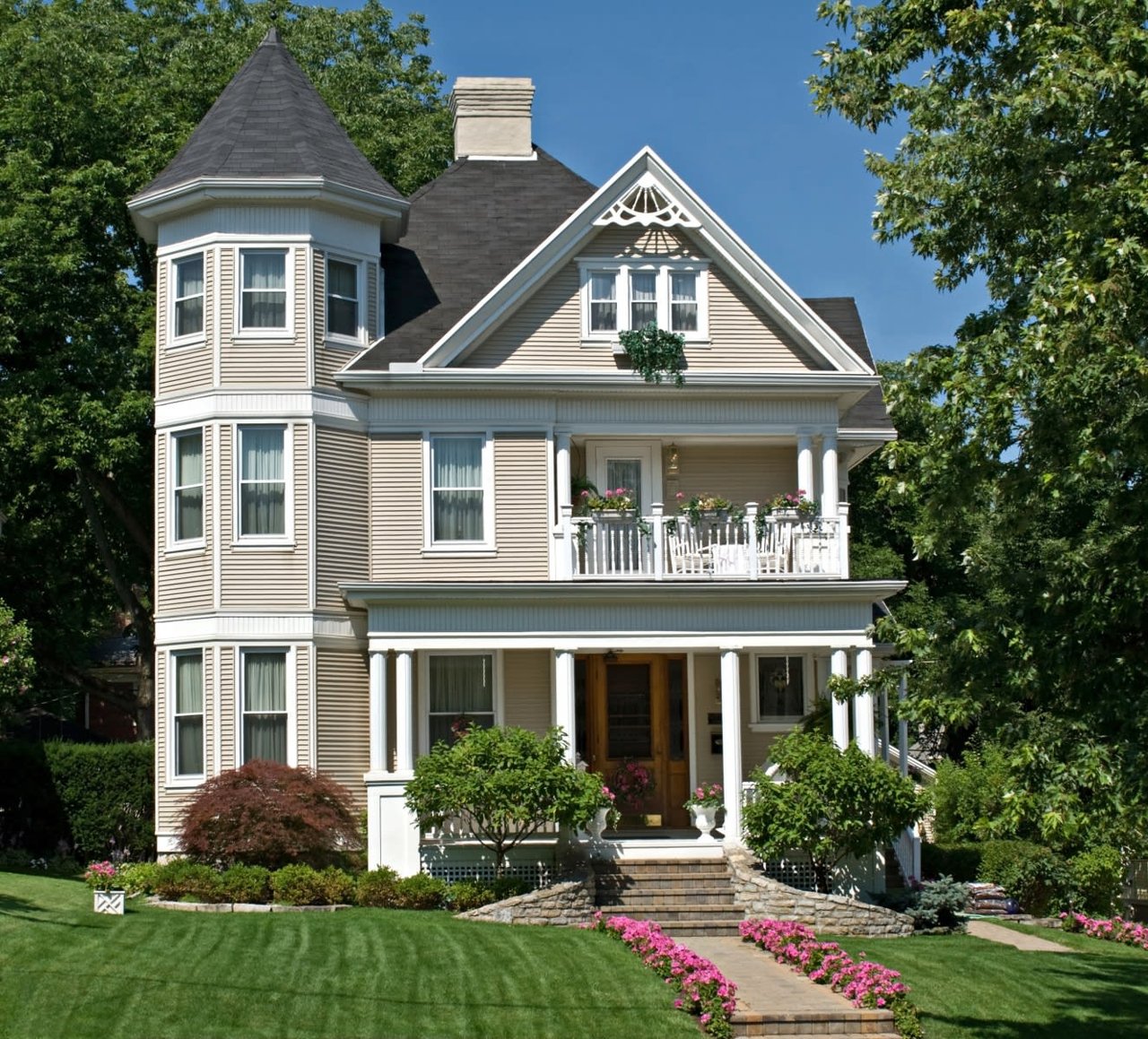
Buyers will find a mix of Victorian-era homes, many built before 1895, alongside Craftsman bungalows and early 20th-century cottages. Typical details include wraparound porches, decorative trim, tall windows, picket fences, and mature trees.
Many of these homes have a known history. The Town's records identify former residences of early mayors, the town's first treasurer, a longtime newspaper owner, and the educator for whom Fisher school is named. Those homes are on Tait Avenue, Wilder Avenue, Bachman Avenue, and Glen Ridge Avenue.
Even the pavement is historic. Almond Grove's streets are concrete, not asphalt. When the Town rebuilt them over several years, it chose concrete to keep the neighborhood's historic character. Phase I (Broadway and Bachman Avenue) was substantially complete in late 2016. Phase II covered Tait, Bayview, Glen Ridge, Almendra, Wilder, Bean, Massol, and Nicholson. For buyers, that means the street infrastructure has been recently rebuilt.
Buying a Historic Home in Almond Grove: What to Know
A historic home is a different kind of purchase. These are the points we walk buyers through before they make an offer.
- Exterior changes go through historic review
- Additions, second stories, window replacements, new garages, and many other exterior changes are subject to the Almond Grove Historic District Guidelines. They are also subject to the Town's historic preservation approval process. Projects may go before the Historic Preservation Committee. If you are planning a remodel, review what is realistic before you buy, not after.
- Expect trade-offs on parking and lot size
- Many homes predate the automobile and have no garage. Lots can be modest. If a garage or a large yard is a must-have, narrow your search early.
- Inspect beyond the basics
- Homes more than a century old can come with older foundations, electrical, plumbing, and sewer lines. Plan for a thorough general inspection, plus specialized inspections such as a sewer lateral scope, foundation review, and pest inspection.
- Weigh location factors
- The district's edges border Highway 9 and North Santa Cruz Avenue. Summer weekend beach traffic heading to Highway 17 can affect some streets. Walk the block at different times of day before committing.
- Research the house's story
- The Town offers a guide on how to research the history of a house in Los Gatos. It is a worthwhile step, especially if you plan to restore original details.
- For the right buyer, these considerations are part of the value. The same rules that limit change are what protect the neighborhood's character and long-term appeal.
Almond Grove FAQ
- Where is the Almond Grove neighborhood in Los Gatos?
- Almond Grove is adjacent to downtown Los Gatos. It generally runs from Highway 9 to Bean Avenue, and from North Santa Cruz Avenue to Glen Ridge Avenue, in ZIP code 95030.
- When was Almond Grove built?
- The former almond orchard was subdivided and auctioned in 1887, the same year Los Gatos incorporated. Many homes date to the late 1800s and early 1900s.
- Is Almond Grove a historic district?
- Yes. It is one of five historic districts in Los Gatos, along with Broadway, Fairview Plaza, University/Edelen, and the Downtown Commercial District.
- Can I remodel a home in Almond Grove?
- Yes, but exterior changes are subject to the district's design guidelines and the Town's historic review process. Interior updates typically face fewer restrictions. Confirm the scope of any planned project with the Town's planning staff before you buy.
- What style are the homes in Almond Grove?
- Most are Victorian-era homes, Craftsman bungalows, and early 20th-century cottages, many with front porches and original architectural detail.
- Is Almond Grove walkable?
- Yes. Walkability is the neighborhood's biggest draw. Downtown Los Gatos dining, shopping, the library, and the farmers market are a short walk away.
Buying in Almond Grove With a Local Team
Homes in Almond Grove call for more than a standard search. You need to understand historic-review limits, the condition issues common to older homes, and how a property's history and street location affect its value.
The Pulpan Brothers Group lives and works in Los Gatos. We help buyers evaluate historic properties with clear eyes: what the home is worth, what you can realistically change, and what to budget for. If Almond Grove or another Los Gatos historic district is on your list, contact The Pulpan Brothers Group to start the conversation.