Somewhere in Palm Haven or the older blocks off Lincoln Avenue this fall, a home inspector will run the kitchen tap in a house built before 1950 and watch the water come out faintly rust colored. It happens often enough in Willow Glen's pre-war stock that nobody treats it as a scandal. What it does is start a clock that has nothing to do with how fast the house sells.
Willow Glen's single-family market has stayed firmly in seller territory through the back half of 2026. As of mid-September, average sale prices were still running ahead of last year, pending sales jumped sharply in August, and homes were closing at close to full asking price. That is a market that moves on a scale of days and weeks. The systems inside a lot of Willow Glen's oldest houses, and the permit process that governs how you're allowed to touch their exteriors, move on a scale of decades and months. The friction in a Willow Glen transaction rarely comes from the price. It comes from a seller or buyer discovering, mid-escrow, that their house is running on a different clock than the one the market is keeping.
The Market's Clock Is Fast
A seller's market in Willow Glen looks the way it has looked for most of 2026: multiple offers on well-priced listings, homes going pending within one to two weeks, and sale-to-list ratios sitting at or above full asking price. That pace rewards a seller who has already handled anything an inspector might flag, and it punishes one who hasn't, because there's no slow season to fall back on. A buyer with four other offers to compare doesn't wait around for a seller to sort out a permit question that should have been answered before the sign went up.
That pace assumes the house is ready to move at the market's speed. In Willow Glen's oldest pockets, two things routinely aren't.
The Pipe Clock
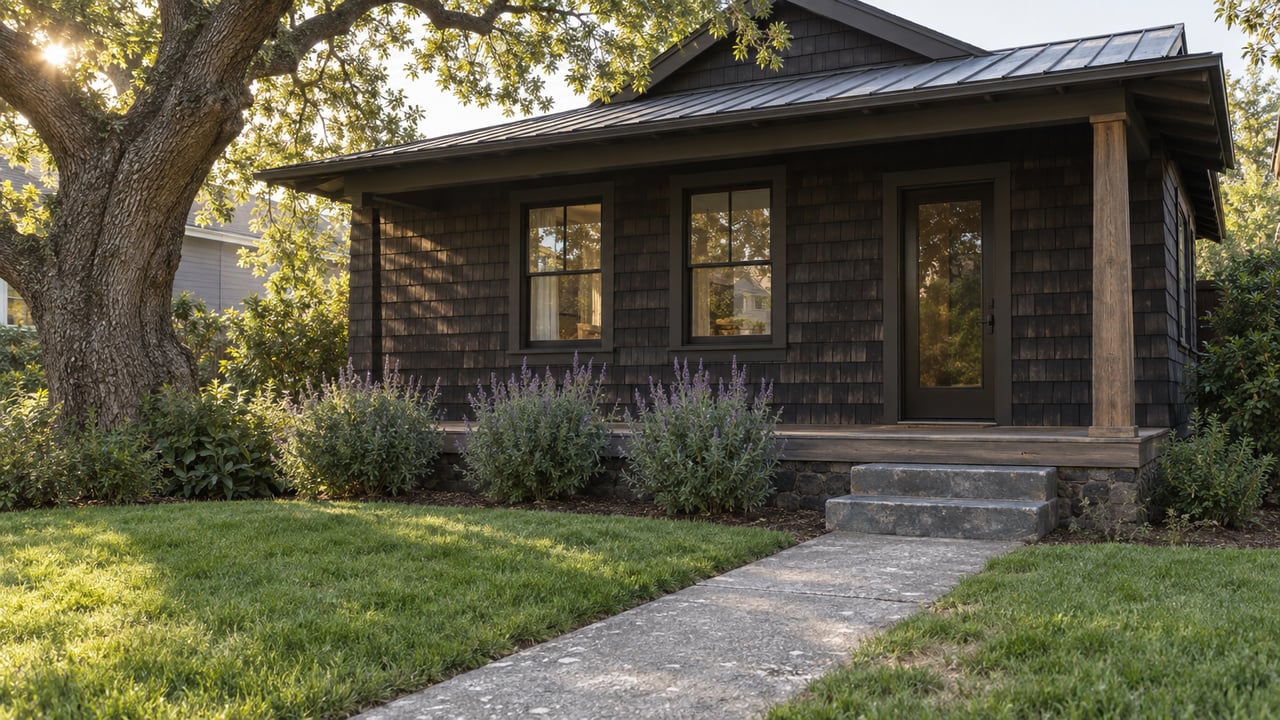
Willow Glen's historic core, Palm Haven, and the neighborhoods immediately around them were built out largely from the 1910s through the 1950s, and a meaningful share of that stock still runs on its original plumbing. Galvanized steel was the standard water-supply material through roughly 1960, and it carries a functional lifespan in the range of 40 to 60 years before the internal zinc coating wears through and the steel underneath starts corroding from the inside. A house built in 1935 and never repiped isn't just past that window. It's decades past it.
Santa Clara County's water adds to the problem. Hardness runs from roughly 7 to 26 grains per gallon depending on the neighborhood, and that mineral load accelerates corrosion in both galvanized steel and copper. Seismic activity does its own quiet damage over time, stressing joints and fittings in ways that show up as recurring pinhole leaks rather than one dramatic failure. The pre-WWII lots in the historic core often pair that with clay sewer laterals, which have a long design life for the pipe itself but are prone to joint failure and root intrusion well before the material wears out, which is why a video inspection matters more than a guess.
None of this is a reason to walk away from a character home. It's a reason to know the number before an inspector finds it for you. Whole-house repiping across Santa Clara County typically runs $4,200 to $16,100 for PEX, or $5,500 to $21,000 for copper, and slab foundations add another 30 to 38 percent on top of that. A seller who has that number, or better, has already had the work done and permitted, walks into escrow with one less place for a buyer to renegotiate. A permitted repipe also does something a receipt from an unlicensed plumber can't: it becomes part of the property's permit record, which is exactly what a buyer's lender and a future buyer's inspector will both go looking for.
The Permit Clock
The second clock is regulatory, and it moves at a completely different pace depending on which category a specific house falls into, something no listing photo will tell you.
Palm Haven was laid out in 1913 as one of the era's planned "residence parks," with palm-lined boulevards and a formal center plaza, and the city designated it a Historic Conservation Area in 1987. That designation matters enormously for anyone planning to touch a home's exterior. According to customhome.us, properties inside a City Landmark District need a Historic Preservation Permit and a Site Development Permit before a standard building permit can even be filed, both reviewed by the Historic Landmarks Commission at its monthly public hearing, and the full process typically takes four to six months after fees are paid. The City of San José says properties inside a Conservation Area more often qualify for a Permit Adjustment reviewed at the staff level with no public hearing, a considerably faster path for minor exterior modifications.
The exception is demolition or new construction. If a house sits on the city's Historic Resources Inventory at all, tearing it down or replacing it triggers a public hearing process regardless of which category it falls into. Ordinary maintenance, meanwhile, doesn't require a permit of this kind at all as long as it replaces deteriorated elements in kind without changing the exterior's appearance.
The category isn't always obvious, and it isn't always what the neighborhood implies. San Jose's Historic Resources Inventory has flagged individual houses as a "Structure of Merit" based on their architect or design history even when the surrounding block reads as an ordinary mid-century neighborhood. The only reliable way to know what applies to a specific address is to check the inventory itself or call the city's Planning Division before writing an offer that assumes a remodel timeline. A buyer who removes contingencies on the assumption of a quick kitchen expansion, only to learn afterward that the exterior work needs a Historic Preservation Permit, has traded a two-week escrow for a four-to-six-month wait they didn't budget for.
San Jose is currently working through proposed updates to its Historic Preservation Ordinance, clarifying definitions around what counts as a "substantial alteration" and how historic district findings get made. It's a reminder that these rules aren't static, and that the answer for a given property is worth confirming close to the time of purchase rather than assumed from an old conversation with a neighbor.
The Trade Nobody Advertises
According to San Jose Metro Authority, a Mills Act contract can reduce assessed value by 40 to 60 percent, has a minimum ten-year term, and is recorded against the deed. For a buyer who already intends to preserve rather than gut a Palm Haven bungalow, that's a real number to run against the slower permit path, not just a consolation prize for accepting one.
What This Means If You're on Either Side of the Table
A seller in Willow Glen's older stock benefits from treating the pipe clock and the permit clock as pre-listing work, not post-offer surprises. A camera inspection of the sewer lateral and a straight answer on supply-line material, done before the first showing, removes the single most common reason a fast escrow slows down. Knowing and disclosing whether the property sits in a Conservation Area, a Landmark District, or neither lets a listing agent set buyer expectations correctly from day one instead of managing confusion during the inspection period.
A buyer planning any exterior change to a Willow Glen or Palm Haven property benefits from checking the Historic Resources Inventory before the offer, not after it's accepted. The difference between a staff-level Permit Adjustment and a four-to-six-month Historic Preservation Permit process is the difference between a renovation that starts this winter and one that starts next summer.
Frequently Asked Questions
Does every old house in Willow Glen require a Historic Preservation Permit for renovation work? No. Only City Landmarks and properties inside one of the city's six Landmark Districts require the full Historic Preservation Permit and Site Development Permit process. In addition, ordinary maintenance that doesn't change a home's exterior appearance doesn't require this kind of permit at all.
Is a whole-house repipe required before selling an older Willow Glen home? There's no legal requirement to repipe before a sale. The practical case for doing it, or at least documenting the plumbing's condition, is that original galvanized supply lines in a pre-1960s home are typically well past their 40-to-60-year design life, and a buyer's inspector will find that regardless of whether the seller addresses it first.
How do I find out if a specific address is in a Landmark District, a Conservation Area, or neither? The city's Historic Resources Inventory is the authoritative source, and the Planning Division can confirm a property's status directly. It's worth checking before finalizing renovation plans rather than assuming based on the neighborhood's general reputation.
Character homes in Willow Glen carry real value precisely because they weren't built to a modern template. Knowing which systems and which rules are still running on their original timeline is what keeps that value from turning into a delay nobody planned for. If you're weighing a purchase or a sale in Willow Glen's historic streets and want a clear read on what a specific address is actually working with, the Pulpan Brothers Group is a good place to start that conversation.
This article is general information, not legal, tax or financial advice. Consult a qualified professional about your situation.