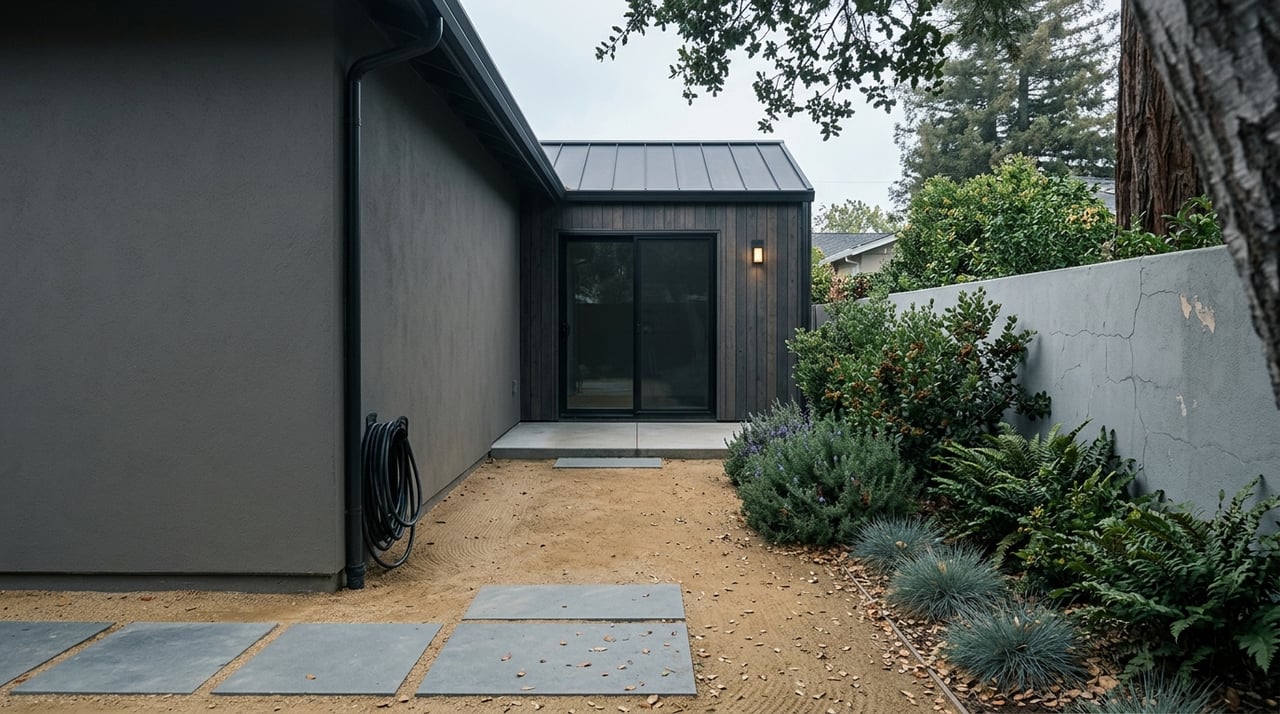
Wondering whether your Campbell property has real ADU potential, or just a nice idea on paper? You are not alone. For many homeowners, an accessory dwelling unit can open the door to flexible living, added income, or long-term value, but the rules, costs, and site details matter more than most people expect. This practical overview will help you understand what Campbell generally allows, what to evaluate on your lot, and where timelines and budgets can shift. Let’s dive in.
What ADU potential means in Campbell
In simple terms, an ADU is a secondary home on the same parcel as your primary residence. A JADU, or junior accessory dwelling unit, is smaller, capped at 500 square feet, and must be created within a single-family home or its attached garage.
In Campbell, ADUs are allowed in all residential zoning districts and certain planned development parcels with residential or mixed-use designations. A qualifying single-family property may add one ADU and one JADU, which gives many owners more flexibility than they realize.
Campbell’s process is also relatively straightforward in concept. ADU applications go directly to the Building Division rather than through a separate land use entitlement process, and under California rules, completed ADU and JADU applications must be approved or denied within 60 days.
Where ADUs can fit on a Campbell lot
A property’s ADU potential usually starts with physical fit. Even when a parcel qualifies on paper, the actual layout of the lot can determine whether your best path is a detached unit, an attached unit, or a conversion.
Campbell allows a detached ADU up to 1,200 square feet and up to 20 feet in height. Rear and interior-side setbacks can be 4 feet, which is helpful for many smaller or more constrained lots.
There is also an important state-level backstop for feasibility. Local standards cannot prevent at least an 800 square foot detached ADU with 4-foot side and rear setbacks, which helps protect baseline development potential on eligible properties.
Campbell also provides flexibility in placement. An ADU may sit in front of, beside, or behind the primary home, although historic properties have narrower rules. On those properties, only detached and interior ADUs are allowed, and detached units must be placed behind the primary dwelling on the rear half of the lot.
Front-yard constraints can still work
Front-yard limitations do not always end the conversation. Campbell’s bulletin says an ADU up to 800 square feet with 4-foot side and rear setbacks may encroach into the front setback if there is no other unimproved area on the lot where it can fit.
That matters if your parcel has an unusual shape or if the main home occupies most of the buildable area. In those cases, a careful site review can reveal options that are not obvious at first glance.
Detached, attached, or conversion?
The right ADU type depends on your lot, your goals, and your budget. In Campbell, each option can work well, but each comes with different tradeoffs.
Detached ADUs
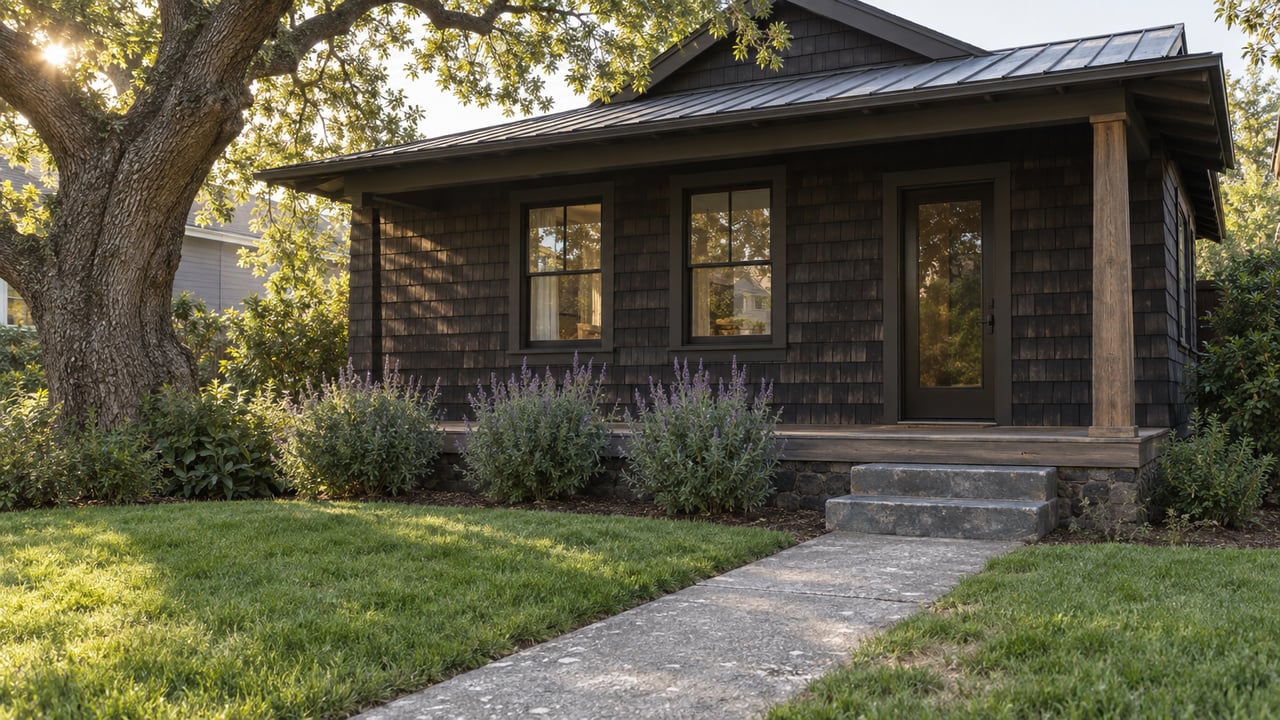
Detached ADUs often give you the most privacy and design independence. Campbell allows them up to 1,200 square feet, which can make them attractive if you want a larger standalone living space for long-term guests, extended household use, or rental income.
They also tend to involve more site work, more utility coordination, and higher total cost. If your lot has enough open area after setbacks, a detached layout may offer the clearest separation between the main residence and the ADU.
Attached ADUs
Attached ADUs connect to the main home, which can simplify some site planning decisions. In Campbell, attached ADUs can be up to 50 percent of the primary dwelling’s living area, with a minimum living area of 1,000 square feet permitted.
Design standards matter more here. Campbell’s bulletin says attached or converted ADUs must more closely match the primary home’s roof form, roofing, wall materials, and related design elements than detached units.
Converted ADUs and JADUs
Conversions are often the most efficient starting point if you already have usable interior or garage space. On multifamily parcels, Campbell also allows the conversion of existing non-livable space into ADUs, with additional detached ADUs also possible.
A JADU can be an especially practical option if you want a smaller footprint and lower overall cost. Because JADUs must be created within a single-family home or its attached garage and are capped at 500 square feet, they are often part of a lighter-touch strategy.
Parking is usually not the biggest hurdle
Many homeowners assume parking will stop an ADU plan before it starts. In Campbell, that is often not the case.
The city bulletin says no parking spaces are required for ADUs or JADUs. If you remove parking as part of a conversion, you do not have to replace it.
If you choose to add parking anyway, there are still rules to follow. The stall and driveway must be paved, and the driveway must meet the city’s 25-foot backup-distance requirement.
The hidden feasibility factors
Setbacks and size limits are only part of the story. In practice, some of the biggest project delays come from coordination items that homeowners do not always see coming early enough.
A sample Campbell plan-check list shows that new ADU projects can involve:
- West Valley Sanitation District approval
- Title 24 energy documentation
- Deed restrictions
- New addressing
- Park fees
- School district fees
Campbell also requires permit applications to be submitted through its MGO system. If a submittal is incomplete, the process can take longer, and the city notes that its ADU express plan check is currently suspended.
Preapproved plans may save time
If speed matters, one possible advantage is Campbell’s preapproved plan gallery. While that does not remove all review steps, it may help you shorten the design and review path compared with starting entirely from scratch.
For many homeowners, that can make early planning feel more manageable. It is one more reason to define your scope clearly before you submit anything.
What ADUs may cost in Campbell
Budget is where ideas become decisions. Countywide Santa Clara ADU planning materials suggest a rough placeholder of $400 to $550 per square foot, including design, fees, and construction.
That broad range reflects real differences in project type. A simple interior conversion JADU may start around $30,000, while a large detached ADU with higher-end finishes can run $400,000 or more.
Kitchen and bath selections can move the total quickly. Site conditions, utility upgrades, and lot complexity are also major cost drivers, which is why two Campbell properties with similar lot sizes can have very different ADU budgets.
Fees can vary more than expected
Campbell’s local rules page gives a rough fee range of about $2,500 for a simple garage conversion to $14,000 for a 1,200-square-foot detached ADU. That spread alone shows why the project type matters so much.
There is also an important size threshold to know. ADUs under 750 square feet are not required to pay the Campbell Union School District fee or the park fee, and statewide rules exempt ADUs up to 750 square feet from impact fees.
Once you go above that size, costs can rise quickly. A regional example for a 1,159-square-foot detached ADU showed total listed fees of $18,626.01, which is a useful reminder that fees can become a meaningful line item.
How long the process may take
It is smart to think about timing in two phases: permit review and total project duration. Even though California requires a decision within 60 days after a completed application is received, that does not mean every project moves quickly from concept to completion.
Countywide guidance suggests that most ADU projects take one to two years from start to finish. Once permits are issued, construction usually takes about 6 to 12 months.
Because Campbell’s one-week ADU express plan check is currently suspended, it is safer to plan around a conventional review timeline. The clearer and more complete your initial package is, the better your odds of avoiding unnecessary delay.
Common reasons homeowners add ADUs
For many Campbell owners, ADUs are less about trend and more about flexibility. California and Santa Clara County guidance point to some of the most common use cases.
These include:
- Housing for extended family
- Space for a caregiver
- Aging in place support
- Long-term or mid-term rental income
Campbell’s local rules also say ADUs and JADUs generally cannot be rented for fewer than 30 days. That makes short-term rental use less compelling than a long-term housing strategy.
What ADUs may mean for taxes and value
An ADU can add utility and appeal, but it is important to think about tax treatment early. Santa Clara County’s ADU guide says the main home is not reassessed, but the added value of the ADU can increase assessed value and property taxes.
That is one reason a one-on-one review can be worthwhile once you have a rough concept. If you are comparing different ADU sizes or layouts, even small design choices may affect both cost and long-term economics.
From a resale perspective, ADU potential can become part of a property’s broader story. Buyers may see value in flexible living arrangements, future rental options, or added separation of space, especially when the design fits the lot well and the project feels thoughtfully integrated.
A practical way to assess your property
If you want a realistic read on ADU potential in Campbell, start with a parcel-specific checklist. The most useful first step is not asking whether ADUs are allowed in general, but whether your specific site supports the kind of ADU you actually want.
Focus on these questions:
- How much usable footprint remains after setbacks?
- Would a detached, attached, or converted layout fit best?
- Are there front-yard or placement constraints on the lot?
- Will utility or district approvals affect cost or timing?
- Are you trying to stay under 750 square feet to reduce fees?
- Is your goal household flexibility, rental income, or future resale appeal?
If you own a home in Campbell and are weighing whether an ADU could strengthen your property’s long-term value or marketability, a local, property-specific strategy matters. For guidance grounded in Silicon Valley housing decisions and thoughtful property positioning, connect with The Pulpan Brothers Group. Let’s tell your home’s story.
FAQs
What ADU sizes are generally allowed on Campbell properties?
- Campbell allows detached ADUs up to 1,200 square feet and up to 20 feet tall, while JADUs are capped at 500 square feet and must be within a single-family home or its attached garage.
What parking is required for an ADU in Campbell?
- Campbell’s bulletin says no parking spaces are required for ADUs or JADUs, and parking removed for a conversion does not need to be replaced.
What is the Campbell ADU approval timeline?
- Under California rules, completed ADU and JADU applications must be approved or denied within 60 days, but full project timelines often run one to two years from planning through construction.
What fees should homeowners expect for a Campbell ADU?
- Published Campbell guidance gives a rough fee range of about $2,500 for a simple garage conversion to $14,000 for a 1,200-square-foot detached ADU, with larger projects potentially carrying additional district and impact-related charges.
What rental rules apply to ADUs and JADUs in Campbell?
- Campbell’s local rules say ADUs and JADUs generally cannot be rented for fewer than 30 days, so they are usually better suited for long-term or mid-term housing use.
What should homeowners check first before planning an ADU in Campbell?
- Start with your lot layout, setbacks, placement options, utility coordination, likely fees, and whether a detached unit, attached unit, conversion, or JADU best matches your property and goals.