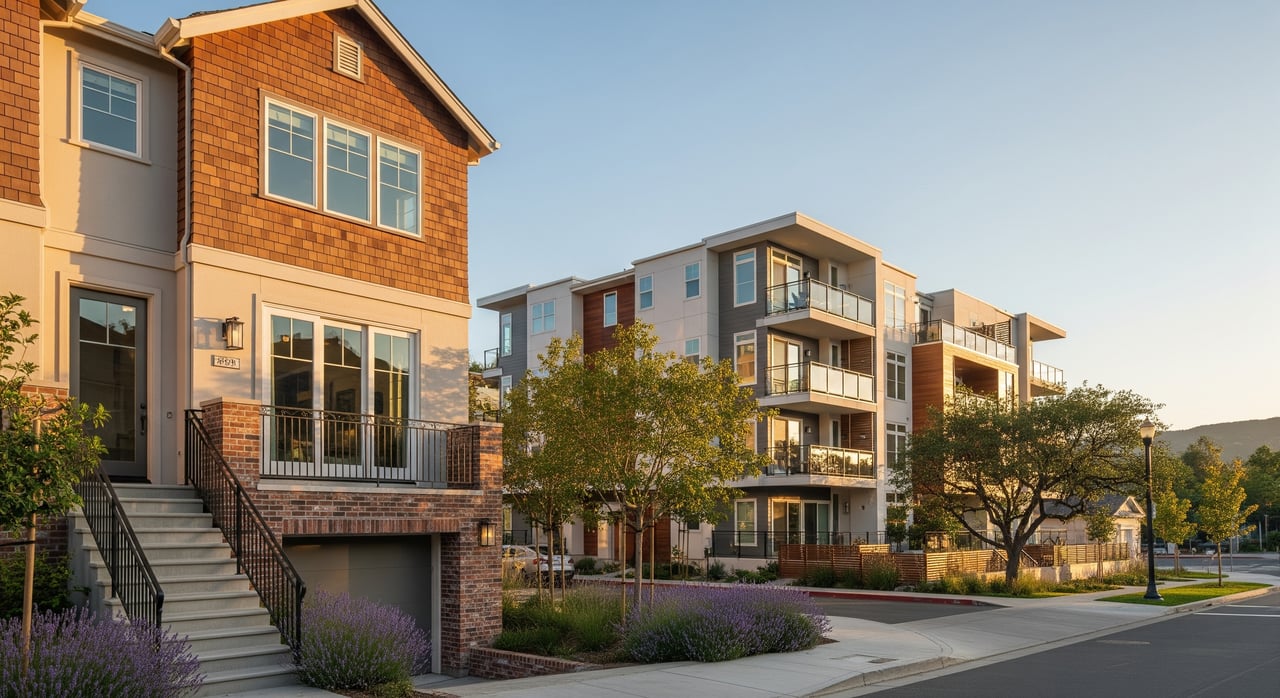
Trying to decide between a condo and a townhouse in Campbell? You are not alone. Each option carries different ownership rules, monthly costs, and lifestyle trade-offs, especially near Downtown Campbell and The Pruneyard. In this guide, you will learn what those differences mean for your budget, financing, insurance, and day-to-day living so you can choose with confidence. Let’s dive in.
Condo vs townhouse: legal basics in California
Condo ownership basics
A condominium is a legal form of ownership. You own the interior of your unit and a shared interest in common areas like land, exterior walls, roof, and amenities. An HOA manages these shared elements under recorded CC&Rs and bylaws that set rules, budgets, and reserves.
Townhouse structures vary
“Townhouse” describes the style, not the legal ownership. In Campbell, some townhomes are set up as condominiums with shared exteriors and an HOA. Others are fee simple, where you own the structure and land while the HOA maintains only shared features like landscaping or private roads. Always verify the recorded documents to know your responsibilities.
Documents to review
- CC&Rs, bylaws, and HOA articles of incorporation
- HOA budget, reserve study or funding plan, and financial statements
- Meeting minutes and delinquency reports
- The full seller HOA disclosure packet required under California’s Davis-Stirling Act
Monthly costs in Campbell
HOA dues and coverage
Condo HOA dues often cover exterior building insurance, landscaping, exterior maintenance, roof care, and common utilities or amenities. Townhome dues vary. If the townhome is a condo project, the HOA may cover exteriors and roofs. If it is fee simple, the HOA may only handle common areas, and you will maintain your own exterior. In the Bay Area, HOA dues can range widely, from under 300 dollars for minimal services, to 300 to 700 dollars for mid-range coverage, to 700 dollars or more in larger or amenity-rich communities.
Taxes and utilities
Your total monthly cost includes mortgage, property taxes, HOA dues, and insurance. California property taxes are about 1 percent of assessed value, plus local assessments and parcel taxes where applicable. In many condo HOAs, water, garbage, and exterior maintenance are included. In fee-simple townhomes, you may pay more of these directly.
Reserves and assessments
Why reserves matter
Healthy reserves protect owners from surprise costs. HOAs use reserve funds for major work like roof replacement, exterior rehab, or paving. California requires HOAs to disclose budgets and reserve information to buyers, and best practice is to maintain a current reserve study and a clear funding plan.
How to spot risk
Underfunded reserves raise the risk of special assessments or large dues increases. Read the reserve study, recent meeting minutes, and any planned project schedules. Ask about past or pending special assessments and upcoming capital projects. Well-funded, professionally managed HOAs tend to be more stable and can support stronger resale.
Insurance you will need
Condo HO-6 vs townhouse HO-3
In a condo, the HOA’s master policy usually insures the building’s exterior and common elements. You carry an HO-6 policy for interior finishes, personal property, loss of use, and personal liability. For a fee-simple townhome, you typically need an HO-3 homeowners policy that covers the structure and your land because you are responsible for the exterior and roof. If a townhome is a condo project, HO-6 may apply. Confirm whether the HOA master policy is bare walls or all-in so you can set proper interior coverage.
Earthquake and flood
Standard homeowners and condo policies do not include earthquake or flood coverage. Given California’s seismic risk, you should consider earthquake insurance and review flood maps for any specific property. Ask your insurance agent for quotes that reflect the building type and HOA policy scope.
Financing and resale factors
Condo project approvals
Many lenders, and the secondary market, review the entire condominium project. They consider owner-occupancy rates, HOA delinquency levels, litigation, reserves, and insurance. Some loan programs require project approval. Fee-simple townhomes are often treated like single-family homes, which can be simpler to finance because there is no condo project review.
Value and rental rules
Condos can trade at different price points than fee-simple townhomes due to shared ownership and HOA rules. Location, on-site amenities, and maintenance health all influence value. CC&Rs may limit rentals, pets, exterior changes, and short-term rentals. These rules can affect both cash flow and financing eligibility, so confirm rental caps and any approval process.
Lifestyle near Downtown and The Pruneyard
Privacy and noise
Mid-rise condos near Downtown Campbell place you close to restaurants, transit, and community events, which can come with more shared spaces and potential street or neighbor noise. Townhomes often feel more private with fewer shared indoor areas, though they still share some walls.
Outdoor space and parking
Condos often offer balconies and shared courtyards. Townhomes are more likely to include private patios, small yards, or rooftop decks. Parking differs too. Condos may have assigned spaces or shared garages with guest parking rules, while townhomes often include private garages and driveways. This can be a real advantage in busy pockets near Downtown and The Pruneyard.
Maintenance and security
Condo living shifts more exterior care to the HOA, which is convenient if you want low-maintenance living. Fee-simple townhomes place more exterior upkeep on you, which also gives you more control. Some condo complexes have gated entries or common security systems, while townhomes rely more on individual home measures.
A simple decision framework
- Ownership control vs convenience: Do you prefer minimal exterior maintenance and shared amenities, or more control of your exterior and a house-like layout?
- Budget calculus: Compare mortgage, property taxes, HOA dues, insurance, and a realistic allowance for special assessments over time.
- Financing needs: If you need FHA, VA, or certain conventional loans, verify any condo project approval and HOA financial health early.
- Resale: Does the neighborhood have consistent buyer demand for your preferred product type? Walkable Downtown units often appeal to professionals, while townhomes can draw buyers who want a garage and more space.
- Risk tolerance: Review reserves, minutes, and any litigation history to gauge the chance of dues spikes or special assessments.
- Insurance exposure: Confirm master policy scope, then price HO-6 or HO-3 and add earthquake coverage as needed.
Buyer checklist before you write an offer
- Request the full HOA packet: CC&Rs, bylaws, budgets, reserve study, financials, bank statements, insurance declarations, meeting minutes for the last 12–24 months, and details on any recent or pending special assessments.
- Review owner-occupancy and rental ratios, and any litigation disclosures.
- Confirm what dues cover and whether major projects are planned.
- Verify parking assignments and guest parking rules.
- Get insurance quotes for HO-6 or HO-3 and earthquake coverage.
- Ask your lender about condo project approval requirements or any lending restrictions.
Selling a condo or townhouse in Campbell
- Assemble a complete and current HOA packet to streamline buyer review.
- Disclose known issues, recent assessments, and clarify reserve status.
- If your townhome is fee simple, make responsibilities clear in your marketing, including roof, exterior, and landscape care.
- Prepare a clean property presentation to match the lifestyle buyers want near Downtown and The Pruneyard.
Real-world examples
- Example A: A one-bedroom condo near Downtown Campbell in a mid-rise building with shared lobby and elevator. The HOA covers exterior, master insurance, and often water and garbage. You trade higher dues for low-maintenance living and top walkability.
- Example B: A two or three-bedroom townhome near The Pruneyard with a private garage and small patio. If fee simple, you handle exterior upkeep and carry an HO-3 policy. If it is a condo regime, the HOA may cover the exterior, and you carry an HO-6. You gain more space and storage with a more house-like feel.
Next steps
If you want a clear side-by-side of total monthly cost, likely financing path, and lifestyle fit for specific communities in Campbell, we can help. We review HOA health, identify reserve and assessment risk, and map walkability and commute trade-offs so you can act with confidence. Have questions about a particular building or townhome community? Connect with EJ Pulpan to compare options, review HOA documents, and plan your next move. Let’s tell your home’s story — schedule a private consultation.
FAQs
What is the legal difference between a condo and a townhouse in California?
- A condo is a legal ownership structure with shared common areas under an HOA, while a townhouse is a building style that can be either a condo project or fee simple; always check the recorded documents.
How much are HOA dues in Campbell for these homes?
- Dues vary widely by services and amenities, from under 300 dollars for minimal coverage to 300 to 700 dollars mid-range, and 700 dollars or more for larger or amenity-rich communities.
How do special assessments work in HOAs?
- If reserves are not sufficient for major repairs, the HOA may levy a one-time assessment or raise dues as permitted by CC&Rs and California’s Davis-Stirling rules.
What insurance do I need for a condo or a townhome?
- Condos usually require an HO-6 policy for interiors and personal property, while fee-simple townhomes need an HO-3 policy that covers the structure and land; confirm the HOA master policy scope.
Do condos have more financing hurdles than townhomes?
- Yes, many condo loans require project-level approval that reviews occupancy, reserves, delinquency, insurance, and litigation, while fee-simple townhomes are often financed like single-family homes.
Is earthquake insurance included in standard policies?
- No, standard condo and homeowners policies exclude earthquake and flood, so you should price separate coverage, especially in California.